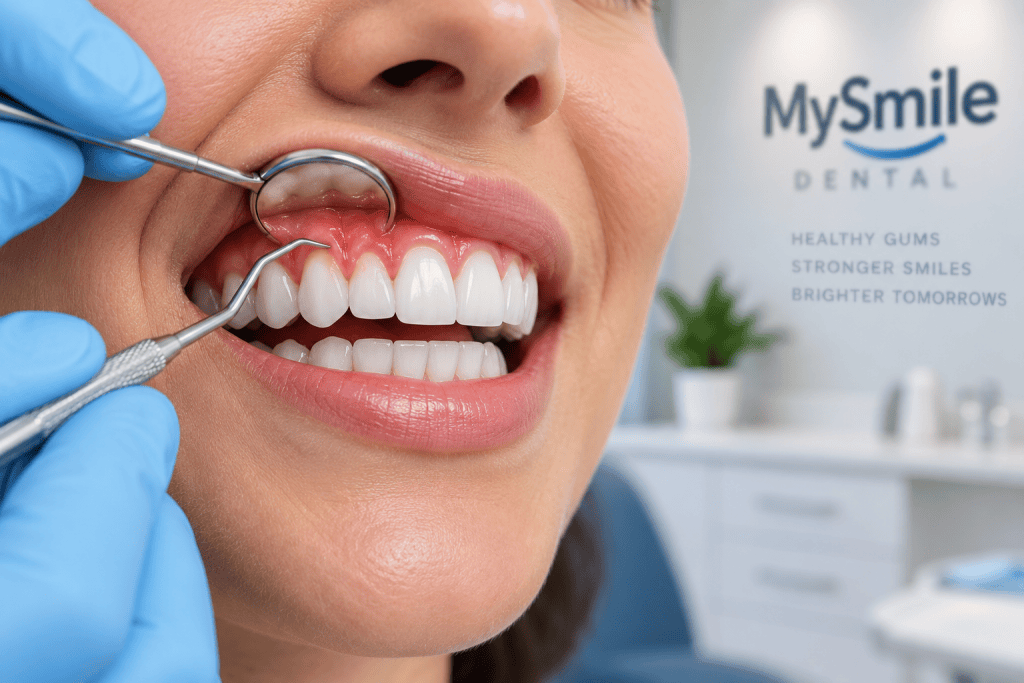
Bleeding gums are easy to brush off, especially if they do not hurt. But persistent bleeding, swelling, bad breath, or changes around your teeth can be early warning signs of gum disease.
The earlier gum disease is identified, the more opportunity there is to control it and protect the teeth and supporting bone.
If you are looking for gum disease treatment in San Antonio, MySmile Dental can evaluate your gums, determine whether gingivitis or more advanced periodontal disease is present, and recommend treatment based on your individual needs.
Here are seven signs you should not ignore.
What Is Gum Disease?
Gum disease, also called periodontal disease, affects the tissues that surround and support your teeth.
It often begins when plaque accumulates around the gumline. If plaque is not adequately removed, it can harden into tartar, which cannot be removed with normal brushing alone.
The earliest stage is known as gingivitis.
At this stage, the gums may become:
- Red
- Swollen
- Tender
- More likely to bleed
According to the CDC, gingivitis can often be prevented and treated through good oral hygiene and professional dental cleanings.
If gum disease progresses into periodontitis, inflammation begins affecting the tissues and bone that support the teeth. Periodontitis cannot simply be reversed with brushing and flossing, but professional treatment can help slow and manage the condition.
MySmile Dental provides periodontal therapy in San Antonio for patients showing signs of gum disease.
1. Your Gums Bleed When You Brush or Floss
One of the most common warning signs of gum disease is bleeding while brushing or flossing.
Occasional irritation can happen, particularly if you have just started flossing regularly. However, gums that consistently bleed should not simply be considered normal.
Healthy gums generally should not bleed every time you brush.
Bleeding can occur when plaque and bacteria irritate the gum tissue, causing inflammation.
If your gums bleed frequently, scheduling an examination can help determine whether you have gingivitis or another periodontal problem.
2. Your Gums Are Red, Puffy, or Tender
Healthy gums are generally firm around the teeth.
Inflamed gums may appear:
- Bright red or darker than usual
- Puffy
- Swollen
- Tender when touched
- Sensitive during brushing or flossing
Inflammation is your body’s response to irritation and bacteria around the gumline.
Gum disease may still be in an early stage when these symptoms first develop.
That is why routine dental cleanings in San Antonio are important even when you are not experiencing tooth pain.
Professional cleanings remove hardened tartar that cannot be removed with a toothbrush at home.
3. You Have Persistent Bad Breath
Everyone experiences bad breath occasionally.
Persistent bad breath, however, can sometimes be associated with bacteria accumulating around the teeth and below the gumline.
You may also notice a persistent unpleasant taste in your mouth.
Bad breath can have several causes, so it does not automatically mean you have periodontal disease. But when bad breath occurs along with bleeding, swollen gums or gum recession, it is worth having your gums evaluated.
The American Dental Association lists persistent bad breath or a bad taste as possible warning signs of gum disease.
4. Your Gums Are Pulling Away From Your Teeth
Have your teeth started looking longer than they used to?
The teeth themselves probably are not growing.
Instead, the gum tissue may be receding.
Gum recession exposes more of the tooth surface and sometimes part of the root.
This can contribute to:
- Tooth sensitivity
- Changes in appearance
- Greater exposure of tooth roots
- Spaces developing between teeth and gums
Gum recession can occur for several reasons, including periodontal disease, aggressive brushing, tooth position and other factors.
A dental examination can help determine why it is happening and whether periodontal treatment is needed.
5. Your Teeth Feel Loose or Have Started Shifting
This is a more concerning sign.
Your teeth depend on healthy gum tissue and supporting bone to remain stable.
As advanced periodontal disease damages these structures, teeth can begin to loosen or shift position.
You may notice:
- New spaces between teeth
- Teeth that feel slightly mobile
- Changes in your bite
- Your teeth fitting together differently
- Changes in how a partial denture fits
The CDC lists loose teeth and changes in the way your teeth fit together as possible signs of periodontal disease.
If you notice these changes, do not wait for the tooth to become extremely loose before scheduling an evaluation.
6. Your Gums Hurt When You Chew
Gum disease is not always painful.
In fact, some people can have significant periodontal disease without experiencing obvious discomfort.
However, advanced inflammation or infection may cause tenderness when chewing.
You might notice discomfort around one tooth or an entire section of your mouth.
Painful chewing can also be caused by cavities, cracked teeth, infections and other dental problems, so an examination is necessary to determine the cause.
If you have severe dental pain, swelling, or rapidly worsening symptoms, our emergency dental care in San Antonio may be more appropriate.
7. Your Dentist Says Your Gum Pockets Are Getting Deeper
During a periodontal examination, your dental team can measure the small spaces between your teeth and gums.
Healthy gums generally fit closely around the teeth.
When periodontal disease progresses, these spaces can become deeper, creating areas where bacteria and tartar can accumulate beneath the gumline.
These are often called periodontal pockets.
Deepening pockets can be an indication that the supporting tissues around the teeth are being affected.
This is one reason dental examinations are important even if your gums do not hurt.
Gum disease can progress before symptoms become obvious.
Gingivitis vs. Periodontitis: What Is the Difference?
Gingivitis is the earliest form of gum disease.
It affects the gum tissue and commonly causes redness, swelling, and bleeding.
When caught early, gingivitis can often be reversed through improved home care and professional dental cleanings.
Periodontitis is more advanced.
With periodontitis, inflammation has begun damaging the structures that support the teeth, including the surrounding bone.
The CDC explains that periodontitis involves bone loss around the teeth and can be managed and slowed with professional treatment.
This distinction is important.
A routine cleaning may be appropriate for someone with generally healthy gums or mild gingivitis, while someone with periodontitis may require periodontal treatment.
What Is a Deep Cleaning?
One of the most common non-surgical treatments for periodontal disease is scaling and root planing, often called a deep cleaning.
This is different from a routine dental cleaning.
During scaling and root planing, plaque and tartar are removed from areas beneath the gumline and around the tooth roots.
The root surfaces are then cleaned and smoothed to help the gums heal and improve the environment around the teeth.
The CDC lists scaling and root planing as one of the professional treatments that may be used for periodontitis.
Learn more about our periodontal therapy services at MySmile Dental.
Routine Cleaning vs. Deep Cleaning
Patients sometimes wonder why they need a deep cleaning instead of a normal cleaning.
The two procedures serve different purposes.
Routine Dental Cleaning
A routine cleaning is primarily designed to maintain oral health and remove plaque, tartar and surface buildup around generally healthy teeth and gums.
Our hygiene and cleaning appointments also give our team an opportunity to monitor changes in your gums and teeth.
Deep Cleaning
Scaling and root planing focuses on areas below the gumline where periodontal disease has developed.
If deeper periodontal pockets and significant tartar buildup are present, a normal cleaning may not adequately address the affected areas.
The correct treatment depends on what your dental examination shows.
Can Gum Disease Cause Tooth Loss?
Advanced periodontal disease can contribute to tooth loss.
As supporting gum tissue and bone are damaged, teeth may gradually lose some of the foundation that keeps them stable.
That does not mean everyone diagnosed with gum disease will lose their teeth.
Professional treatment, periodontal maintenance, good oral hygiene and addressing individual risk factors can help manage the disease.
The goal is to identify the condition before unnecessary damage occurs.
Can Gum Disease Go Away on Its Own?
Generally, no.
Early gingivitis can improve significantly when plaque is controlled through consistent brushing, flossing and professional cleaning.
But simply waiting for symptoms to disappear is not a reliable treatment strategy.
And once periodontal disease has progressed to periodontitis with bone loss, it requires professional management.
Symptoms may even temporarily improve while disease remains present beneath the gumline.
That is why an examination is more useful than judging gum health based only on whether something hurts.
Who Is More Likely to Develop Gum Disease?
Anyone can develop periodontal disease, but certain factors may increase risk.
These can include:
- Inadequate plaque removal
- Smoking or tobacco use
- Diabetes
- Genetics
- Certain medications
- Teeth that are difficult to clean
- Hormonal changes
- Existing health conditions
The CDC notes associations between periodontal disease and factors including smoking, diabetes and poor oral hygiene.
Having a risk factor does not mean you will automatically develop gum disease, but it makes regular dental care especially important.
How Can You Help Prevent Gum Disease?
The foundation of prevention is consistent plaque control.
Helpful habits include:
- Brushing twice each day
- Cleaning between the teeth daily
- Using fluoride toothpaste
- Keeping regular professional cleaning appointments
- Avoiding tobacco
- Following the dental visit schedule recommended for your individual oral health
Our preventive dentistry services are designed to identify dental and periodontal problems as early as possible.
Some patients need more frequent periodontal maintenance than others, particularly after gum disease has already been diagnosed.
Your dentist can recommend a schedule based on your gum health.
Does Bleeding While Flossing Mean You Should Stop Flossing?
Usually, no.
If inflamed gums bleed when you begin cleaning between your teeth, stopping altogether may allow plaque to continue accumulating.
However, persistent bleeding should still be evaluated by a dental professional.
Your dental team can also demonstrate appropriate brushing and flossing techniques so you can clean effectively without unnecessarily traumatizing the gum tissue.
When Should You See a Dentist About Your Gums?
Schedule a dental evaluation if you notice:
- Gums that bleed frequently
- Red or swollen gums
- Persistent bad breath
- Receding gums
- Loose teeth
- New spaces between teeth
- Pain while chewing
- Changes in your bite
- Pus or drainage around the gums
You do not need to wait until several symptoms develop.
Early gum disease may cause only subtle changes.
Gum Disease Treatment San Antonio: Protect Your Smile Early
Gum disease is easier to manage when it is identified early.
Bleeding or swollen gums may be a sign of gingivitis, while gum recession, deeper periodontal pockets, shifting teeth and bone loss can indicate more advanced disease.
The only way to know what is happening beneath the gumline is to have your gums professionally evaluated.
At MySmile Dental in San Antonio, we provide periodontal therapy, professional dental cleanings, and comprehensive preventive care based on each patient’s needs.
Schedule Gum Disease Treatment in San Antonio
If you are experiencing bleeding gums, gum recession, persistent bad breath, or other signs of periodontal disease, schedule an evaluation with MySmile Dental.
Early treatment may help control inflammation and protect the structures that support your teeth.
Call MySmile Dental at (210) 399-8060 to schedule an appointment for gum disease treatment in San Antonio.
Our office is located at 13341 San Pedro Avenue, San Antonio, TX 78216.